

The Ultimate G700 Reference
The Gulfstream G700 is the pinnacle of ultra‑long‑range business aviation. With a 7,500 NM range, a spacious cabin with up to five living areas, and advanced Rolls‑Royce Pearl 700 engines, it sets new standards for performance and comfort.
This guide consolidates everything you need to know — from operating costs and maintenance schedules to market trends and pre‑purchase inspection checklists. Whether you're an owner, operator, or prospective buyer, this is your comprehensive resource.

Power & Efficiency
Under the hood of the G700 – engines, avionics, and aerodynamics.
Ultra‑long‑haul capability with NBAA IFR reserves.
High‑speed cruise without sacrificing range.
Each producing 18,250 lbf of thrust, with a 5% efficiency improvement.
Cruise above weather and traffic.
Balanced field length at MTOW.
Proven dependability from Gulfstream's fleet.
"The G700 combines the range of the G650ER with the cabin spaciousness of the G600, creating an entirely new category of business jet."

Luxury Redefined
The G700's cabin is a masterpiece of design and comfort. With a length of nearly 56 feet and a width of 8 feet 2 inches, it offers more living space than any other purpose‑built business jet.
Up to five living areas can be configured, including a full‑size galley, a spacious lounge, and a private stateroom with an en‑suite shower. The cabin pressure altitude is kept at a remarkably low 3,400 feet, reducing fatigue and improving well‑being during long flights.
Gulfstream's "Cabin Wellness" system uses advanced air filtration and humidity control to create a healthier environment. Combined with the iconic 14 large oval windows, the cabin feels open, airy, and connected to the outside world.
Avionics & Innovation
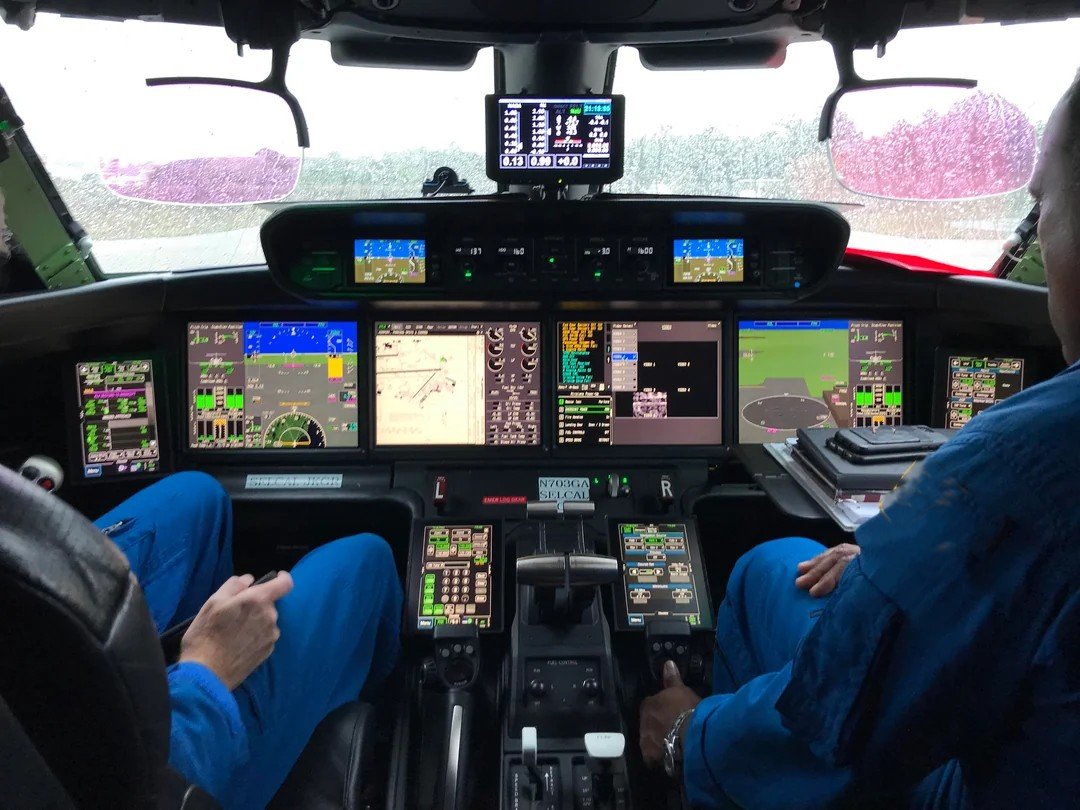
The G700 is equipped with Gulfstream's most advanced flight deck.
Gulfstream Symmetry Flight Deck™ – featuring active control sidesticks and a touch‑screen avionics system with 10 high‑definition displays. The system reduces pilot workload and enhances situational awareness.
Integrated with Predictive Landing Performance System and Enhanced Flight Vision System (EFVS), the G700 is certified for low‑visibility operations, enabling landings in conditions as low as 100 feet decision height.
Connectivity is paramount: the G700 offers high‑speed satellite internet (Ka‑band) and a comprehensive cabin management system that allows passengers to control lighting, entertainment, and temperature from personal devices.
Aircraft History
From concept to certification – the G700 story.
The Gulfstream G700 was announced in October 2019 as the successor to the successful G650ER. It builds on the proven G650 platform with a completely new wing, advanced avionics, and the powerful Rolls‑Royce Pearl 700 engines.
Development milestones:
- ▹ 2019 – Program launch at NBAA
- ▹ 2020 – First flight, beginning certification campaign
- ▹ 2022 – FAA & EASA type certification achieved
- ▹ 2023 – First customer deliveries commence
- ▹ 2026 – Fleet exceeds 150 aircraft, solidifying its market position
The G700 represents the evolution of Gulfstream's ultra‑long‑range philosophy, combining the range and speed of the G650ER with a significantly larger, more comfortable cabin.
Typical Missions
City pairs that the G700 can connect non‑stop, demonstrating its range capabilities.
~6,800 NM
~6,700 NM
~5,500 NM
~4,400 NM
~7,200 NM
~6,100 NM
All distances are approximate nautical miles and assume NBAA IFR reserves.
How the G700 Stacks Up
Comparing the G700 with its closest rivals – Global 7500 and Falcon 10X.
The G700 stands out with its unmatched cabin altitude and spacious interior, making it a top choice for comfort‑oriented operators.
Ownership & Operating Costs
A transparent look at what it really costs to own and operate a G700 – indicative ranges based on 2026 market data.
💰 Direct Operating Costs (per hour)
📊 Annual Ownership Summary
* Estimates based on 2026 market data. Actual costs vary with location, utilisation, and operator profile.
📉 Depreciation & Residual Value
The G700 is expected to hold value well due to strong demand and limited production. Typical depreciation curves:
- Year 1–3: 8–12% per annum
- Year 4–6: 5–8% per annum
- Year 7–10: 4–6% per annum
Residual value after 5 years: approximately 60–70% of original purchase price.
Inspection Schedule
Typical inspection intervals – actual periods depend on your approved maintenance program.
🔄 Routine Inspections
- Pre‑flight Check: Every departure
- Weekly Check: 7 days / 7 cycles (approximate)
- A‑Check: 400 flight hours or 6 months (typical)
- B‑Check: 800 flight hours or 12 months (typical)
- C‑Check: 2,400 flight hours or 36 months (typical)
* Intervals are indicative and may vary by operator and maintenance program.
📋 Phased Maintenance
- 1‑Year / 800 hrs: Systems check, lubrication, filter changes
- 3‑Year / 2,400 hrs: Heavy inspection, landing gear overhaul, structural checks
- 6‑Year / 4,800 hrs: Major inspection, APU overhaul, corrosion prevention
- 12‑Year / 9,600 hrs: Complete airframe refurbishment, primary structure inspection
* These are general intervals; always refer to your aircraft's specific maintenance schedule.
⏱️ Planned Downtime
- A‑Check: 2–3 days
- B‑Check: 5–7 days
- C‑Check: 3–4 weeks
- 6‑Year / 4,800 hrs: 6–8 weeks
- 12‑Year / 9,600 hrs: 10–12 weeks
* Downtime estimates assume parts availability and scheduled planning.
Key Maintenance Considerations
Critical factors that impact the G700's maintenance program and operational readiness.
🔧 Major Systems
- Landing Gear: Overhaul at 12‑year / 9,600 hr interval (typical)
- APU: Hot section inspection at 2,000 hrs; overhaul at 5,000 hrs (typical)
- Hydraulics: Fluid and filter changes every 800 hrs
- Avionics: Software updates and calibration on C‑Check schedule
- Cabin Systems: Environmental and entertainment system checks at A‑Check
⚠️ Critical Components
- Wings & Empennage: Corrosion and fatigue inspection at 3‑year intervals
- Pressure Vessel: Interior inspection at 6‑year / 4,800 hrs
- Engine Mounts: Inspection and torque check at each C‑Check
- Flight Controls: Cable and actuator inspections at A‑Check
📦 Parts & Logistics
- OEM parts availability through Gulfstream's global network
- Pool programs for major components reduce AOG risk
- Typical lead time for critical parts: 24–72 hours
- Recommended spare inventory for active operators: $2.5M – $3.5M
Rolls‑Royce Pearl 700 Support
Understanding the engine maintenance and support ecosystem.
🛠️ Service Programs
- CorporateCare®: Comprehensive maintenance and repair coverage
- Engine Health Monitoring: Real‑time data transmission for predictive maintenance
- On‑Wing Support: Remote diagnostic and repair capability
- Pool Program: Access to replacement engines during maintenance events
📋 Key Maintenance Milestones
- Borescope Inspection: Every 800 flight hours (typical)
- Hot Section Inspection (HSI): 4,000 flight hours (typical)
- Performance Restoration: 6,000 – 8,000 flight hours (typical)
- Engine Overhaul: 10,000 flight hours (typical)
* Intervals are indicative; actual intervals depend on operational cycles and FADEC data.
🌍 Global Support Network
- Rolls‑Royce service centers in North America, Europe, and Asia
- Mobile repair teams for AOG (Aircraft on Ground) support
- 24/7 technical support hotline
- Parts distribution hubs for rapid delivery
ADs & Service Bulletins
Airworthiness Directives and Service Bulletins are continually issued by the manufacturer and aviation authorities. Owners should ensure all mandatory ADs and applicable SBs are reviewed during every maintenance event and before acquisition.
⚡ Airworthiness Directives (ADs)
- Current ADs: Check the FAA and EASA websites for the latest mandatory actions
- Scope: ADs may cover systems, structures, engines, and avionics
- Compliance: Must be accomplished within specified time limits
- Documentation: Maintain accurate records of all AD compliance
* Always consult the latest FAA/EASA AD list for your specific aircraft serial number.
📄 Service Bulletins (SBs)
- Manufacturer Recommendations: Issued by Gulfstream to improve reliability or performance
- Categories: May be mandatory (if referenced by an AD) or optional
- Planning: Integrate SBs with scheduled maintenance events
- Value: Compliance with SBs enhances resale value and operational reliability
📋 Compliance Management
- Maintain an up‑to‑date compliance log
- Schedule AD/SB integration with planned maintenance events
- Engage an authorised Gulfstream service centre for major SBs
- Use digital tracking tools for real‑time compliance monitoring
Inspection Checklist
A comprehensive checklist for prospective G700 buyers.
📁 Documentation Review
- Airframe and engine logbooks (complete history)
- AD and SB compliance records
- Maintenance tracking from new to present
- Damage and repair history (including photos)
- Weight and balance records
- FAA/EASA registration and export documents
🔍 Physical Inspection Areas
- Airframe: corrosion, fatigue, and structural integrity
- Engines: borescope, performance data, and maintenance status
- APU: operational check and maintenance history
- Landing gear: component wear and overhaul status
- Cabin: interior condition, systems functionality
- Avionics: software version, functionality, and calibration
📊 Test Flight & Operational Checks
- Full flight test with performance data capture
- Engine performance and handling characteristics
- Avionics and autopilot system validation
- Cabin pressure and environmental system testing
- Landing gear and brake performance check
* Always engage an independent technical advisor for impartial assessment.
Availability & Resale Trends
Current market dynamics for the G700 – supply, demand, and value projections.
📈 Market Snapshot (2026)
- Total Fleet: ~150 aircraft in service
- Average Age: 2.5 years
- Listings: 8–12 aircraft currently available
- Transaction Volume: ~25–30 sales per year
- Typical Lead Time to Delivery: 8–14 months (new orders)
📊 Resale Value Trends
- 2024 model (low hrs): ~$72M – $76M
- 2025 model (low hrs): ~$75M – $78M
- 2026 model (new/demo): ~$78M – $80M
- Depreciation rate (year 1–5): ~7–10% per annum
- Strong demand drivers: cabin comfort, range, and reliability
🔮 Outlook & Factors
- Limited production supports strong resale values
- Increasing demand from corporate and HNWI segment
- Operating cost efficiency improves as fleet matures
- Technology updates will affect older model values
- Global economic conditions remain a key factor
Who Should Buy a G700?
The G700 is the perfect fit for discerning buyers who demand the best in range, comfort, and technology.
Family Offices
For ultra‑high‑net‑worth families requiring global mobility and uncompromised comfort.
Fortune 500 Corporations
For executive transport and business development teams covering global markets.
Government Transport
For diplomatic and official missions requiring reliability, range, and security.
Charter Operators
For operators who need a versatile, high‑performance aircraft to serve premium clientele.
UHNW Individuals
For personal travel, leisure, and the ultimate expression of luxury and freedom.
The G700 is a statement of success, designed for those who value time, comfort, and performance above all.
How Safe Fly Aviation Can Assist
Independent, expert guidance for every stage of your G700 journey – from acquisition to operations and beyond.
Pre‑Purchase & Acquisition
Independent technical evaluations, records audits, and pre‑purchase inspections. We help you avoid costly surprises and negotiate with confidence.
Technical Records Review
Complete audit of airframe, engine, and component logbooks. We identify gaps, verify compliance, and assess maintenance history.
Maintenance & Reliability
Customised maintenance planning, cost modelling, and reliability tracking. We optimise your maintenance program for cost and uptime.
Market Intelligence
Current market valuations, resale analysis, and fleet trends. We provide the data you need for strategic decision‑making.
Compliance & AD/SB Management
Airworthiness Directive tracking, Service Bulletin assessment, and compliance planning. We ensure your aircraft remains fully compliant.
On‑Site Support
Delivery and acceptance support, test flight attendance, and technical oversight during inspections and major maintenance events.
Stay informed with expert insights
Subscribe to our newsletter for in‑depth aircraft analyses, market updates, and maintenance guidance.
Subscribe Now