Australian Business Aviation & Helicopter Market Outlook 2026-2030
Australian Business Aviation & Helicopter Market Outlook 2026–2030
Executive Summary — Australia’s business aviation and helicopter markets are entering a period of measured but meaningful expansion through 2030, driven by the country’s vast geography, sustained resource-sector activity, a growing base of high-net-worth individuals, and the maturation of a sophisticated charter market.
Australia Market Indicators at a Glance
| Indicator | 2025 / Latest | Outlook |
|---|---|---|
| Business jets | 218 | Moderate growth |
| Registered helicopters | 2,730* | Stable / moderate growth |
| Business jet aircraft added during 2025 | 16 | Pre-owned dominated |
| General aviation flying hours | 1.376m | Moderate |
| Business aviation trend | Positive | Selective expansion |
*2024 BITRE published figure; update with current CASA register data if quoting a live 2026 count. See the Sources & Further Reading section below for the source behind each figure.
Australian Business Aviation Market Today
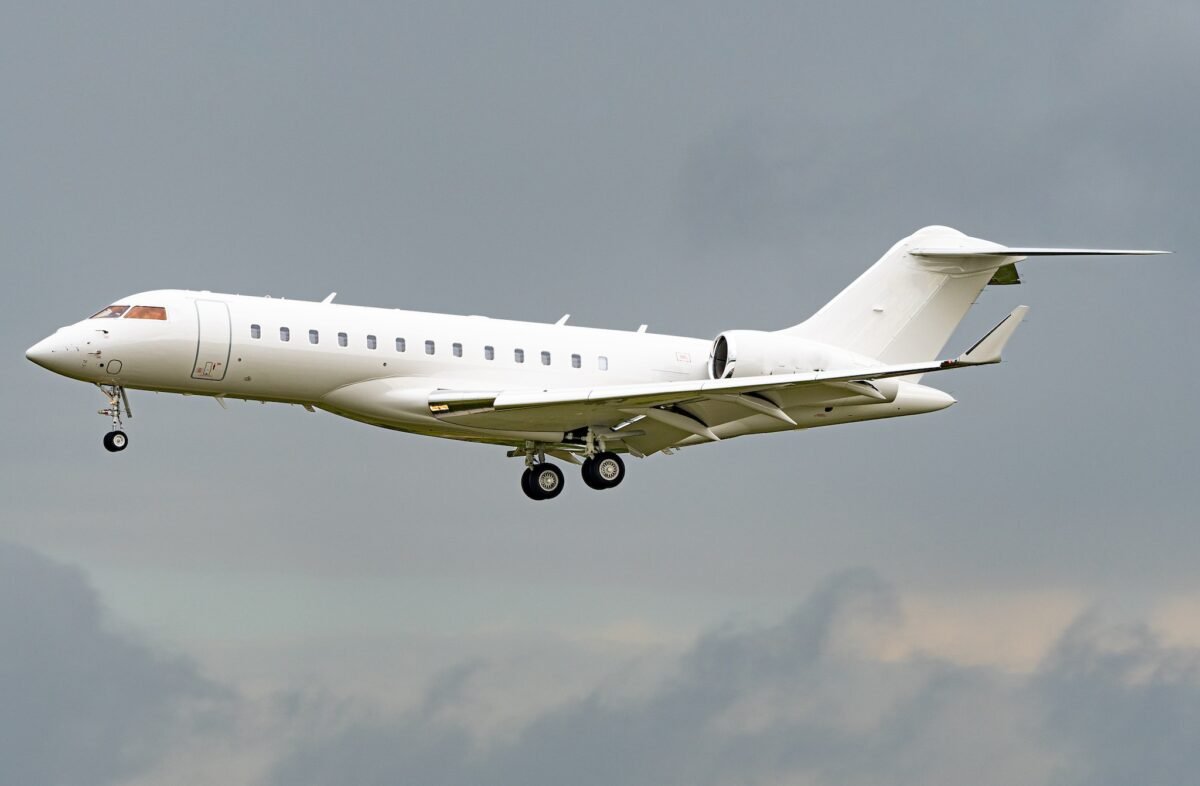
The Australian business jet fleet stood at 218 aircraft by the end of 2025, cementing the country’s position as the second-largest business aviation market in the Asia-Pacific region, behind mainland China. The fleet has expanded by approximately 10% since 2020. Pre-owned aircraft accounted for nearly 95% of Australia’s 2025 business-jet additions, highlighting the importance of the secondary market to fleet expansion. Source: Asian Sky Group, Asia-Pacific Business Jet Fleet Report YE 2025
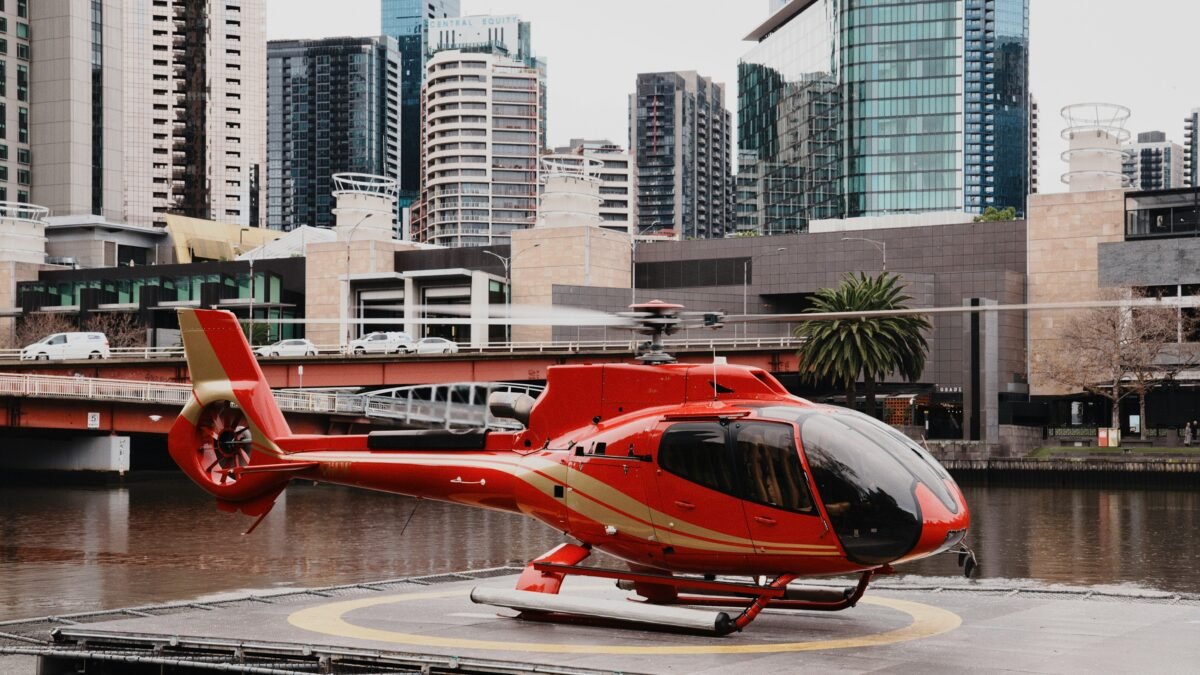
The commercial helicopter sector is likewise expanding, driven by demand from mining and resources, offshore energy, emergency medical services, tourism, and infrastructure development.
Australia helicopter services market — one third-party estimate for Australia’s helicopter-services market places 2025 revenue at approximately USD 55.5 million, projected to reach USD 70.0 million by 2034 (CAGR 2.54%). Market-size estimates vary significantly depending on which helicopter activities and services are included — a separate estimate puts 2024 revenue at approximately USD 61.3 million. This figure should not be read as an official or definitive size of the Australian market. Source: IMARC Group, Australia Helicopter Services Market

Australian Private Jet & Corporate Charter
Australia’s charter market is mature but under-penetrated relative to its wealth and geography. The ultra-long-range and super-midsize segments are seeing the strongest inquiry activity, particularly for routes connecting Sydney, Melbourne, Perth, and regional mining centres. Charter utilisation showed strengthening demand in selected corporate and resources-related markets during 2025, although performance varied significantly by operator, aircraft category and route.
Charter operators are increasingly focusing on fleet flexibility, with a trend toward acquiring pre-owned Gulfstream G650ER, Bombardier Global 6000, and Dassault Falcon 7X/8X aircraft. The empty-leg market has become more sophisticated, with digital platforms improving yield management.
Australian Helicopter Market 2026–2030
Australia had 2,730 registered helicopters at 31 December 2024, according to BITRE. CASA’s live Australian Civil Aircraft Register should be consulted for the most current aircraft-level count. Registered aircraft should not be interpreted as equivalent to commercially active aircraft. Source: BITRE, Australian Infrastructure and Transport Statistics Yearbook 2025 Within the active commercial fleet, the light-twin and medium-twin categories represent the largest operational segments. Strong demand is evident in:
- Mining & resources — FIFO transport, site inspection, exploration support.
- Offshore energy — LNG and oil-and-gas logistics (Western Australia, NT).
- Emergency services — EMS, SAR, firefighting, police.
- Tourism — Great Barrier Reef, Whitsundays, luxury lodges.
Airbus Helicopters, Leonardo, and Bell dominate new-helicopter deliveries, while the pre-owned market is active for H125, EC135, AW139, and Bell 412 models — see Safe Fly's helicopter charter and acquisition services for current availability.

Mining, Energy & Remote Operations
Australia’s resources sector remains one of the most important drivers of helicopter and business aviation demand. Mining and resources are among Australia’s most important commercial helicopter demand drivers, particularly for FIFO transport, site inspection, exploration and remote logistics, with key operations in the Pilbara, Bowen Basin, and the Cooper Basin. LNG projects in Western Australia and the Northern Territory sustain a fleet of medium- and heavy-lift helicopters for offshore crew change, cargo, and emergency response.
Commodity cycles influence demand: while iron ore and LNG remain relatively stable, lithium and rare-earth exploration are creating new pockets of activity, particularly in Western Australia and the Northern Territory. Operators with diversified exposure to multiple commodities are best positioned.

Turboprops: Pilatus, King Air & Daher
Turboprops remain essential for regional and remote Australian operations. The Pilatus PC-12 and Beechcraft King Air 350 are the workhorses of fly-in-fly-out (FIFO) transport, medical evacuation, and freight. The PC-24 has attracted interest for missions requiring jet performance and access to shorter or less-developed airfields, subject to applicable runway and operating limitations, appealing to mining and exploration clients.
Demand for turboprops is supported by their lower operating costs and ability to access remote airstrips. However, the segment faces headwinds from pilot shortages and rising maintenance costs for ageing airframes.
Regional Market Analysis
- New South Wales (Sydney): One of Australia’s principal business aviation centres, with strong charter, management, and maintenance activity. Sydney Airport’s slot constraints are reported to be encouraging some operators toward Bankstown and Camden.
- Western Australia (Perth): A major centre for helicopter and corporate aviation supporting the resources sector. Perth Airport’s business aviation precinct has reportedly seen continued investment.
- Queensland (Brisbane, Gold Coast, Cairns): Tourism and resources drive demand; helicopter tourism in the Whitsundays and Great Barrier Reef is a major growth segment.
- Victoria (Melbourne): Corporate and private jet activity remains strong, with growing interest in luxury tourism to Tasmania and the Alps.
- Northern Territory (Darwin): Government, defence-adjacent, and offshore energy operations sustain a steady demand for helicopters and light jets.
Aircraft Acquisition & Pre-Owned Market
The pre-owned market in Australia is highly active, with brokers and operators reporting continued strength in transaction activity through 2025. Aircraft buyers are increasingly focused on:
- Complete maintenance records — vital for resale liquidity.
- Engine and APU cycles — key drivers of valuation.
- OEM support availability — particularly for Gulfstream, Bombardier, and Dassault aircraft.
- Import considerations — CASA registration and airworthiness approvals.
Acquisition timing is influenced by interest rates and the AUD/USD exchange rate. A weaker Australian dollar favours export-oriented sellers, while a strong dollar benefits importers. Professional pre-buy inspections and appraisals, plus independent title reviews, are strongly recommended.

MRO & Technical Support
Australia’s MRO capacity for business aircraft and helicopters is concentrated in Sydney, Melbourne, Brisbane, and Perth. Safe Fly Aviation’s market assessment indicates that MRO capacity remains a constraint for heavy maintenance, particularly for large-cabin jets and medium helicopters, with lead times for engine overhauls (Pratt & Whitney, Rolls-Royce, Honeywell) lengthening industry-wide and operators reporting waits of several months in some cases. Safe Fly's MRO consultancy team can help owners plan around these constraints.
Pilot and licensed aircraft maintenance engineer (LAME) availability remains an important operational constraint, particularly for remote and resource-sector operations. Wage pressures are most acute in remote operations, where FIFO conditions and housing costs deter experienced staff.
Sustainability, SAF & eVTOL Realism
Sustainable Aviation Fuel (SAF) availability in Australia remains an emerging market rather than a mature nationwide supply system. Government policy — including the AUD $1.1 billion Cleaner Fuels Program announced in 2025 — is focused on developing domestic low-carbon liquid-fuel production, certification and supply chains, while demand-side measures continue to evolve. Source: Australian Government Aviation White Paper; Cleaner Fuels Program, 2025
eVTOL and advanced air mobility are attracting significant media attention. In Safe Fly Aviation’s analysis, for many remote, utility, EMS and tourism missions, helicopters are likely to retain significant operational advantages through 2030 because of their established infrastructure, payload flexibility and ability to operate without dedicated vertiport networks — certification timelines, infrastructure build-out (vertiports, charging), and range limitations remain material constraints for eVTOL. Early adoption is more likely to begin with specific urban or regional use cases (potentially Sydney or Melbourne) rather than a broad-based replacement of existing helicopter operations.
2026–2030 Market Scenarios
The scenarios below are Safe Fly Aviation's own analytical estimates, built from the 2025 fleet baseline plus assumptions about GDP, commodity prices, charter utilisation and pre-owned market conditions — see the Methodology section below for the full basis and its limitations.
Base Case — Most probable
Moderate GDP growth (2–3% p.a.), stable commodity prices, and continued UHNW wealth accumulation. Business jet fleet grows to ~235 units by 2030; helicopter utilisation increases moderately. Charter demand strengthens, particularly for super-midsize and long-range jets.
Bull Case — Upside scenario
Stronger-than-expected commodity boom, accelerated infrastructure spending, and a surge in luxury tourism. Fleet growth could exceed 250 business jets; helicopter flying hours expand meaningfully. Pre-owned aircraft values rise, and acquisition activity intensifies.
Bear Case — Downside scenario
Prolonged economic slowdown, falling commodity prices, and a severe pilot shortage. Fleet growth stalls, charter demand softens, and MRO capacity gaps worsen. Aircraft values decline, particularly for older models with high cycle counts.
Segment Demand Scorecard 2026–2030
Australian Business Aviation Market Outlook: Key Questions
How large is Australia’s business aviation market?
As of 2025, the business jet fleet totals 218 aircraft — the second-largest in Asia-Pacific behind mainland China (Source: Asian Sky Group). The helicopter services market is estimated at approximately USD 55.5 million by one third-party research estimate, though market-size figures vary by methodology and definition.
Is business aviation growing in Australia?
Yes, although growth has been relatively modest. The fleet has expanded by approximately 10% since 2020 (Source: Asian Sky Group), and charter operators are reporting strengthening utilisation through 2025. The medium-term outlook remains positive, underpinned by resources and high-net-worth demand.
What is driving private jet demand in Australia?
Key drivers: UHNW wealth growth, corporate travel, mining executive transport, and increased charter penetration. The “pre-owned premium” is also driving buyers to acquire well-maintained aircraft with low cycles.
What is driving helicopter demand?
Mining and energy remain primary drivers; tourism (Great Barrier Reef, Whitsundays) is a strong secondary driver, along with EMS and government operations.
Which Australian regions have the strongest helicopter demand?
Western Australia (Perth, Pilbara), Queensland (Bowen Basin, Cairns), and the Northern Territory (Darwin, offshore).
Is Australia a good market for aircraft acquisition?
Yes, for well-maintained pre-owned aircraft with strong support. Buyers should evaluate mission profile, operating base, and MRO access carefully.
What types of business jets are most suitable for Australia?
Ultra-long-range (G650, Global 7500) for international routes; super-midsize (Falcon 8X, Challenger 650) for domestic and regional operations; turboprops for remote airstrips.
What industries drive helicopter demand?
Mining, oil & gas, tourism, emergency services, infrastructure inspection, and agriculture.
What will happen to the Australian helicopter market by 2030?
Moderate growth, with fleet modernisation and a shift toward more capable medium-twin helicopters. Pre-owned values for older models may soften.
Will eVTOL significantly affect Australian helicopter operations by 2030?
In Safe Fly's analysis, unlikely at scale. eVTOL will most likely remain experimental and limited to urban pilot projects through 2030. Helicopters are expected to continue dominating utility, tourism, and EMS missions.
Opportunities for Aircraft Buyers & Operators
- Pre-owned business jets with low cycles and strong maintenance records offer attractive value — see Safe Fly's aircraft sales and acquisition services.
- Helicopter acquisition — focus on models with broad operator support (H125, AW139, Bell 412).
- Charter management — operators with diverse fleets and flexible capacity are well-positioned.
- MRO investment — engine and component support capacity is stretched; independent MROs have growth potential.
Key Risks
- Economic slowdown or commodity-price collapse.
- Pilot and engineer shortages intensifying.
- Interest rate volatility affecting financing costs.
- AUD/USD fluctuations impacting acquisition and operating costs.
- Regulatory changes (CASA, environmental mandates) increasing compliance burden.
- Supply-chain disruptions affecting parts and engine support.
If You Are Buying an Aircraft in Australia in 2026–2030
- Mission profile — define utilisation, passenger numbers, range, and operating base.
- Maintenance status — review engine cycles, APU hours, and recent inspections.
- Records quality — complete, digitised records are critical for resale.
- OEM support — verify availability of parts and technician support in Australia.
- Charter potential — consider aircraft that can be chartered to offset ownership costs.
- Total cost of ownership — include hangarage, insurance, crew, and maintenance reserves.
Methodology & Data Limitations
- Government / regulatory data: CASA (aircraft register) and BITRE (aviation activity statistics, yearbook).
- Business jet fleet data: Asian Sky Group, Asia-Pacific Business Jet Fleet Report YE 2025.
- Commercial market-research estimates: IMARC Group and other named providers — clearly labelled as third-party estimates, not government statistics.
- Forecasts and scenarios: Safe Fly Aviation analytical estimates, built from the 2025 baseline plus stated GDP, commodity and market-condition assumptions — not government or third-party projections unless attributed.
- Operator commentary: anonymised industry consultation, not a statistically representative survey unless a sample size is stated.
- Forecast horizon: 2026–2030 unless otherwise noted.
- Currency: figures are shown in the currency as published by the original source (AUD or USD) — not converted.
- Scope: civil fleet only; military aircraft are excluded unless explicitly stated.
- Registered ≠ active: registered fleet figures (e.g. the 2,730 helicopter count) should not be interpreted as equivalent to commercially active aircraft or annual utilisation.
- Fleet count ≠ utilisation: a growing fleet does not necessarily mean proportionally growing flight hours, and vice versa.
- Market revenue estimates are methodology-dependent: different research providers can produce materially different market-size figures for the same segment (see the helicopter-services market discussion above) depending on what activities are included.
Safe Fly Aviation Advisory
With deep expertise in aircraft sales, acquisition, charter, and aviation consultancy, Safe Fly Aviation provides independent, data-driven advice to aircraft owners, buyers, and investors across Australia.
Planning an aircraft or helicopter acquisition in Australia?
Request an Australia Aircraft Acquisition Assessment →Aircraft Sales · Acquisition · Appraisal · Charter · MRO Consultancy
How to Buy a Private Jet in Australia in 2026 Aircraft Sales & Acquisition Aircraft Appraisal Private Jet Charter Helicopter Charter Aircraft Guide MRO Consultancy Aviation Consulting Engines & Spares
Sources & Further Reading
- Asian Sky Group – Asia-Pacific Business Jet Fleet Report, YE 2025.
- CASA (Civil Aviation Safety Authority) – Australian Civil Aircraft Register / data files for registered aircraft.
- BITRE (Bureau of Infrastructure and Transport Research Economics) – Australian Infrastructure and Transport Statistics Yearbook 2025; Australian Aircraft Activity data.
- Airservices Australia – Movement and flight-hour data (commercial and private).
- Australian Government – Aviation White Paper (Towards 2050); Cleaner Fuels Program (2025).
- IMARC Group – Australia Helicopter Services Market report.
- Department of Infrastructure, Transport, Regional Development, Communications and the Arts – Aviation policy papers.
- Australian Bureau of Statistics – Tourism and mining employment data.
- OEM publications: Airbus Helicopters, Leonardo, Bell, Gulfstream, Bombardier, Dassault.
- Industry consultation: major Australian charter and helicopter operators (anonymised).